

Butyl Cellosolve is widely used in household cleaning agents. But did you know that it’s a toxic agent that you might want to avoid?
Butyl Cellosolve is an extremely dangerous chemical that is found in a wide variety of home cleaning products – glass cleaners, oven cleaners, general degreasers, among other things. It is a colorless liquid with a sweet, ether-like odor.
Many companies still insist that butyl cellosolve is non-hazardous. Here, let’s talk about reasons why you should look out for it or avoid using it altogether.
Is Butyl Cellosolve Toxic?
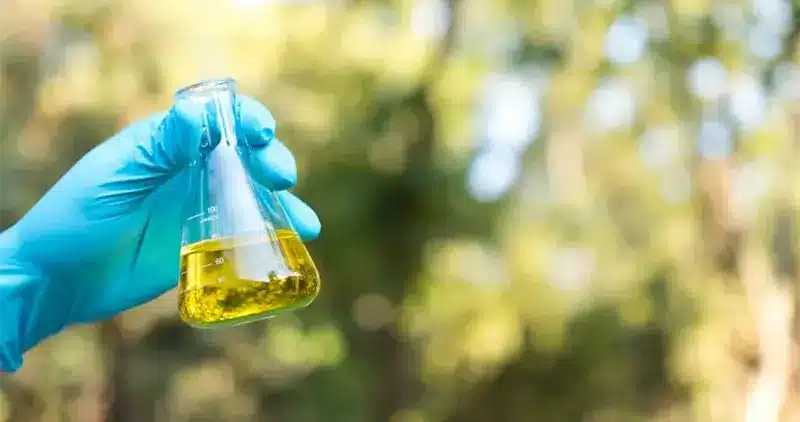
Butyl Cellosolve comes in different names. It is also known as butyl glycol, Dowanol, butoxyethanol, and ethylene glycol monobutyl ether (EGBE).
This substance has made it onto the list of California’s toxic air substances. According to studies, this colorless liquid poses some serious health effects to both humans and animals.
For animals, butyl cellosolve can damage their reproductive system which could lead to problems such as testicular damage, reduced fertility, death of embryos and birth defects. For humans, it can cause skin irritation, blood disorders, and liver and kidney damage.
If that isn’t alarming enough, butyl cellosolve is also a neurotoxin that can lead to central nervous system depression. This means that it slows down a person’s neurological functions, which can easily be life-threatening. Yikes.
What Is Butyl Cellosolve Used For?
We already established that butyl cellosolve is dangerous. But what exactly makes it extremely popular in the home cleaning industry?
Butyl Cellosolve or Butyl Glycol is a versatile solvent that is used in both industrial and commercial industries. Its production dates back more than half a century ago and it is commonly found in paints, surface coatings, and cleaning products.
Industrial Use
The paint industry uses 75% of the total butyl cellosolve production. This is because the chemical has low volatility and active solvency resulting in extended drying times and better flow.
Because of its high boiling point, it is also popular in printing inks. Besides that, butyl cellosolve is also a chemical intermediate that is responsible for butyl glycol acetate production.
It is also an important component of hydraulic fluids, cutting oils, and Corexit 9527, an oil dispersant.
As if that isn’t enough, manufacturers also use butyl cellosolve together with phthalic anhydride to produce plasticizers.
Commercial Use
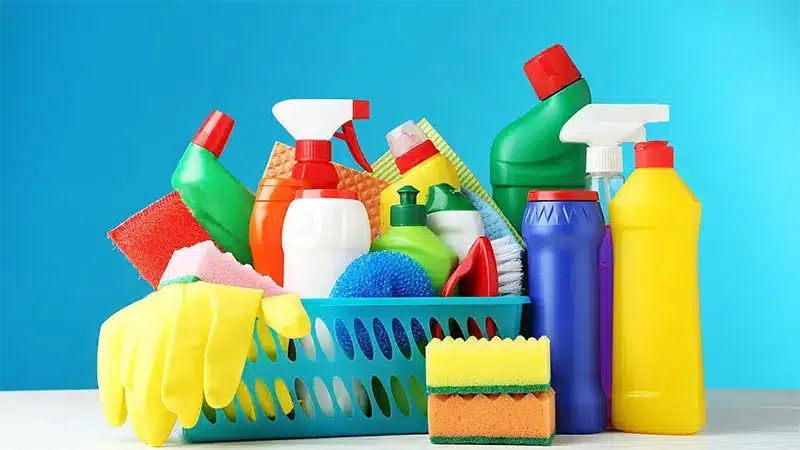
For those who don’t know, you can find butyl cellosolve almost anywhere. Your home, workplace, malls, and even the grocery store. It is primarily used in cleaning products such as spot removers, carpet cleaners, and glass cleaners.
Why? Simply because it has excellent cleaning capabilities. Plus, it gives these cleaners that signature clean scent! In fact, your favorite cleaning product probably contains this too.
Here are other applications for butyl cellosolve:
- Varnishes
- Varnish removers
- Leather protectors
- Printing pastes
- Paints
- Pesticides
- Air fresheners
- Cosmetics
- Enamels
- Herbicides
- Degreasers
Risks and Side Effects
Nonetheless, the health issues that come with constant exposure to butyl cellosolve greatly overweighs its benefits. I mean, what’s the use of having the best cleaning product if it comes with kidney damage on the side, right?
The most affected organs of butyl cellosolve:
- Skin
- Eyes
- Reproductive organs
- Respiratory system
- Central Nervous System
- Hematopoietic system
- Lymphoid system
Health risks you could experience upon inhalation or skin contact:
- Irritation (skin, throat, nose, etc.)
- Eye redness
- Blurred vision
- Lightheadedness
- Abdominal pain
- Liver and kidney damage
- Nausea
- Pulmonary edema
- Birth defects
With this much on the list, you definitely wouldn’t want such a chemical sitting around your home or workplace.
But if you do, then don’t worry. In the next section, we’re going to walk you over several safety precautions to follow when handling butyl cellosolve.
Better safe than sorry!
Safety Precautions
Keeping these in mind, we highly discourage you from using cleaning products containing this chemical altogether.
However, if the need persists, then please make sure to note the following safety precautions to prevent any mishaps in the future.
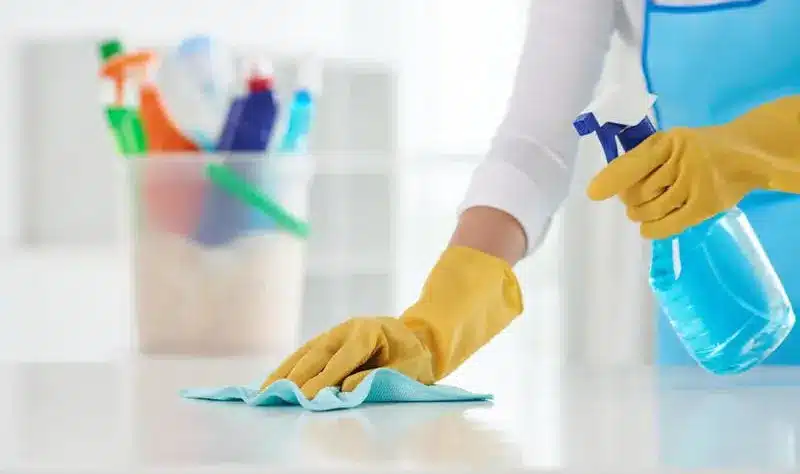
- Keep far from heat sources. No smoking!
- Wear protective gear (masks, gloves, eye protection, etc.)
- Wash hands thoroughly after handling.
- Avoid eating and drinking while handling product
- Use in a well-ventilated area or outdoors.
- Keep away from pets and children.
In case of skin contact:
- Wash the affected area with soap and water thoroughly
- Remove contaminated clothes and throw them away. If you plan to reuse it, make sure to wash it well.
- Seek medical attention immediately if skin irritation occurs.
In case of eye contact:
- Carefully rinse eyes with water and remove any contact lenses if you can. Continue rinsing until irritation ceases.
- If irritation persists, seek medical attention immediately.
In case of inhalation
- Go outside for fresh air and take deep breaths.
- Seek medical attention if you experience breathing issues or anything unusual.
In case swallowed:
- Rinse mouth thoroughly
- Seek medical attention if any issues occur.
If a fire occurs because of the chemical, use water fog, CO2, alcohol foam, or dry chemical to extinguish it effectively.
In case of unexpected leaks, isolate immediately and safely remove the source if possible. Don’t forget to wear safety gear including a respirator to avoid inhaling harmful gasses.
The spilled chemical should then be absorbed with a non-combustible material and stored in another Teflon container. Any remainders can be washed away with water.
If it’s only a minor leak, then you can also opt for a kitchen towel. Just make sure you’re willing to burn it afterward!
Storage
Also remember to store butyl cellosolve in a cool, dark, well-ventilated area away from food, kids, and pets. For transport, they are kept inside carbon steel or Teflon containers with a 0.9 specific gravity and 60° flashpoint.
Butyl Cellosolve Substitutes
For years, manufacturers have struggled to create alternatives for butyl cellosolve. Although there isn’t a single best alternative at the moment, some companies are using organic solvents in place for butyl cellosolve.
Organic solvents are carbon-based and are just as capable of dispersing substances like butyl cellosolve. Although most organic solvents are neurotoxins as well, they’re definitely better than one listed in California’s toxic air substances!

Another possible alternative is bio-based solvents. As its name implies, these solvents were produced from plant and animal feedstocks. Bio-based solvents are made of derivatives such as methyl soyate, ethyl lactate, and D-Limonene.
Bio-based solvents are perfect alternatives for butyl cellosolve for home use. They’re less toxic, biodegradable, and to top it all, environmentally friendly.
Conclusion
Butyl Cellosolve is too dangerous to use, so you might really want to stray far from it. Most especially, if you have kids running around or pets.
It can cause several health issues depending on how exposed you are from blurred vision to serious blood defects!
So, let this serve as yet another example of a dangerous toxic chemical that is prevalent on our grocery store shelves.
Before you buy a cleaning product, be sure to read the label and look for this ingredient under one of its “pseudonyms” above.
Ideally, you want to avoid toxic cleaners at all, but if you cannot, be cautious when using anything with this ingredient in it!


Women’s Voices for the Earth recently released a report called Household Hazards: Potential Hazards of Home Cleaning Products which includes a section o n butyl cellosolve (also know as 2-butoxyethanol).
The report includes an appendix with a list of common cleaning products which contain this chemical. (Its usually not listed on the label!)
You can download this report and appendix at:
http://www.womenandenvironment.org
You can also take action at this site, and sign a petition asking cleaning product manufacturers to remove this and other toxic chemicals from their products!
http://www.womenandenvironment.org
I have been using a lens cleaner pushed by OPSM for my glasses. It’s 93% purified water and 7% butyl cellosolve is this unsafe long turn to use on your glasses near your eyes??
Zeiss recommends only pure ethanol for cleaning its optics. A relatively cheap source of that is the liquor called “Everclear.” Great for cleaning, nasty for drinking.
Just about everything according to California is toxic, causes cancer and should be avoided. At one time they claimed hamburger caused cancer. Seriously according to California about the only safe thing to do is stop living and die, because there literally is no reason to live because it is just too dangerous!
Amen brother !!!